My relaxing morning shower was quickly turning into a sprint to finish as the water became increasingly frigid.
So I knew what I was doing first thing that morning.
Replacing our hot water heater.
What I didn’t know at that point was what I would find myself doing every morning after that.
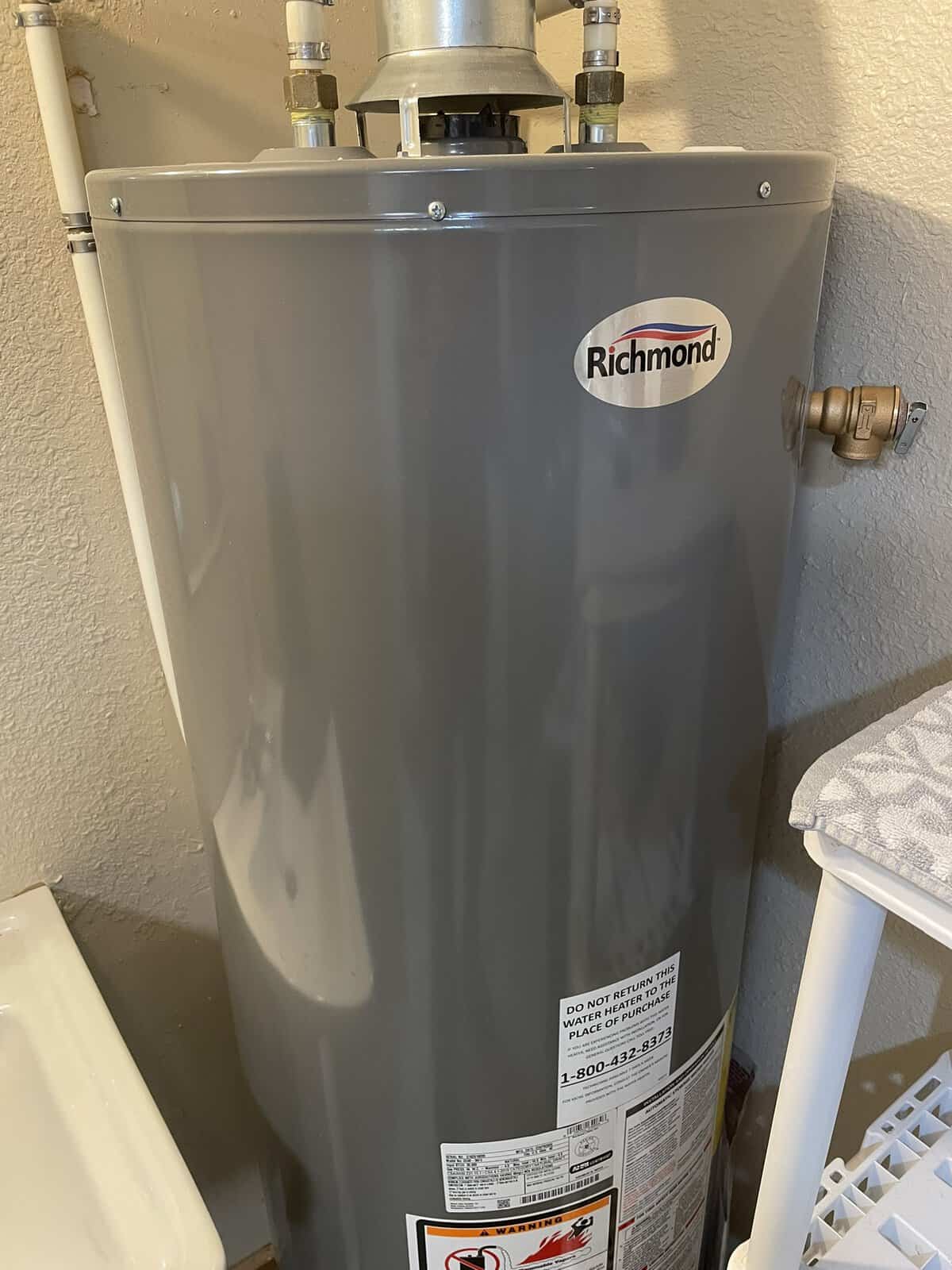
If you’ve spent any time in manufacturing, you’ll know exactly what I mean when you look at the picture below.
And even if you don’t have a manufacturing background, you can probably relate to the experience I had as I bought, unpacked, and installed my new hot water heater.
It was flashback after flashback all morning long.
For over 20 years I worked for a company that produced HVAC products. Air conditioners, furnaces, thermostats, that sort of thing. For residential and commercial buildings.
I got to be involved in almost every part of the process and I loved it.
What I enjoyed most was being involved in cross-functional teams. I started as a member of these teams when I was in Design Engineering and then had the privilege of leading these teams.
We did everything from small cost-reduction projects to major new platform designs.
Sometimes we were at the front end of the process gathering Voice of the Customer data or writing product specifications.
Sometimes we were at the end of the process dealing with an issue a technician or a homeowner was experiencing.
Whatever we were doing, we were working together as a team.
People were involved.
And that meant we had to communicate.
We had a lot of conflict. It wasn’t always healthy, but most of the time it was.
The conflict came because every person in the conversation had a different perspective. We had different goals.
The design engineer was trying to meet the often-conflicting targets for performance, efficiency, quality, cost, ergonomics, assembly, serviceability, and a myriad of other factors.
Manufacturing engineers were managing their tooling budget.
Procurement had their own goals related to suppliers.
Safety made sure everyone involved was cared for.
Sales needed to be able to sell what we built.
Marketing wanted it to look good.
And we all had the shared goal of meeting the project schedule.
Needless to say, working together as a team was challenging.
And, most of the time, it was a lot of fun.
A hot water heater isn’t exactly the same as an HVAC product, but they’ve got a lot in common.
Sheet metal, screws, paint, controls, stickers, installation instructions, packaging, etc.
And the ability to safely burn gas to produce heat without blowing up my house.
This amazing feat is something that I still appreciate.
Talk about something that’s not easy to do!
Some would say it’s only slightly harder than leading a cross-functional team.
Based on my experience, I agree.
So I was extremely impressed with my hot water heater replacement experience.
Because I know just how much effort was involved in getting this product designed, built, and delivered to the hardware store in my tiny hometown in southeast Kansas.
My appreciation started the minute I saw James pushing it on a dolly through the store to my truck parked out front.
The outside of the cardboard box was covered with stickers and printing.
I knew that every label, image, and word printed on the outside of the box had been designed, discussed, debated, and decided upon.
The instructions to the forklift operator were there for a reason.
The features that were highlighted were intentional.
And I’m sure the packaging itself had been through countless revisions to ensure the hot water heater had no damage when I opened it a few minutes later in my home.
That design also had to have the lowest material cost possible.
Don’t forget that it needed to be the exact right size to fully pack out the trailer it was shipped in.
While also being easy for workers on the line to quickly assemble without having any ergonomic problems from doing their job hundreds of times every shift.
I was already impressed and I hadn’t even left Main Street.
My admiration for the cross-functional team continued when I opened up the box.
“Read This First!” was the first thing I saw on a sticker on the foam protecting the hot water heater control module.
So, I did.
The instructions explained exactly how to light the pilot light.
How many phone calls did someone in Service have to get before they suggested this improvement?
Was this added material and labor cost quickly embraced by the full team or did it take months of analysis to prove the value?
I could go on and on about the things I noticed and was curious about because I’ve been in the room leading these types of conversations.
When you experience the benefits as an installer or a homeowner, you might not realize that what seems obvious wasn’t always so clear.
Every product feature that made its way to the final product required a group of individuals to work together.
A team of individuals representing different departments and aspects of the business had to engage in healthy conflict to make the best decision with the information they had.
They had to work together and communicate clearly.
Based on my experience in situations like these, the teams that trust each other the most communicate the best.
And the teams that trust each other the most and communicate the best deliver the best results.
If you want to build trust within your team so you can communicate better and deliver better results, I’d love to help you.
That’s what I do for my clients today.
I’m no longer leading cross-functional teams designing and building HVAC products, but it would be a privilege to apply what I learned doing that to help you solve the challenges you’re facing in your business.
And speaking of challenges, here’s what I told you I’m now struggling with every day.
As I said, if you have a manufacturing background, you’ll know exactly what I’m going through.
Scroll down to the picture of my hot water heater after I installed it in our bathroom.
Zoom in and take a close look at the screws that attach the top of the water heater to the side.
Look at the one in front.
Where I can’t not see it.
Right at eye level where it greets me every morning.
Can you see how it’s about an eighth of an inch lower than the other screws?
Do you have the same questions I do?
Was it designed this way? (I doubt it.)
How was the fixture designed and how could it be improved to maintain alignment?
Why can’t I just forget about this because I know it doesn’t affect the functionality or integrity of the unit?
Who on the manufacturer’s cross-functional team has also noticed this and is reminding themselves that this minor alignment issue isn’t a big deal?
I’m thankful for the insights I’ve gained from a couple of decades of experience in cross-functional teams in manufacturing, but there are times when I wish I could just not think about things like this…
Helping you lead with kindness and confidence,
Greg
P.S. The next Leadership Clarity Accelerator cohort begins this Thursday, October 8! As I write this, I have one spot open. By the time you read this, I expect it will be sold out like the one in August. It’s a small group where I facilitate conversations to help leaders like you stop doing work their team is ready to own. It’s all about reclaiming your time and developing your people (including you!). If you’d like to join or send someone from your team, reach out in case there’s still room. If there’s not, I’d be happy to get you or your teammate on the waiting list for the next one in 2027.
Here’s what Josh Engelbrecht shared on LinkedIn about his experience in LCA. Trayco Ross also shared this post about what he appreciated about being in LCA.
If you’d like to see any of my previous newsletter issues, you can find them here along with other articles. And, if you’re not getting my weekly newsletter and would like to, just enter your info here.

Greg Harrod
Greg Harrod is a Business Coach and Strategic Communications Partner. Follow GregHarrod.com to learn how you can build clear communication, aligned teams, and simple rhythms so your business runs smoothly. Greg will help you learn how to go from daily firefighting to calm, confident leadership by sharing his 30+ years of experience leading teams and businesses.
A quick note about affiliates
Some of the pages on my website contain affiliate links to products, apps, and services. If you click through and purchase, I may receive a commission on the sale and you pay no more. My policy is to only affiliate with products and services that I believe will provide value to you.