Last week I wrote about how growing up in a blue-collar family shaped my view of “real work.”
I learned to associate work with tangible results.
When you fix or build something, you can point to what you accomplished.
That work ethic helped me build my career.
But it also made it easy for me to undervalue leadership work that doesn’t produce an immediate, visible result.
If you missed last week’s newsletter, you can read it here: Does Leadership Count as Real Work? – Greg Harrod
I promised there was another side to this issue.
And I had that in mind as I was talking with Danielle Putnam, CEO of The New Flat Rate.
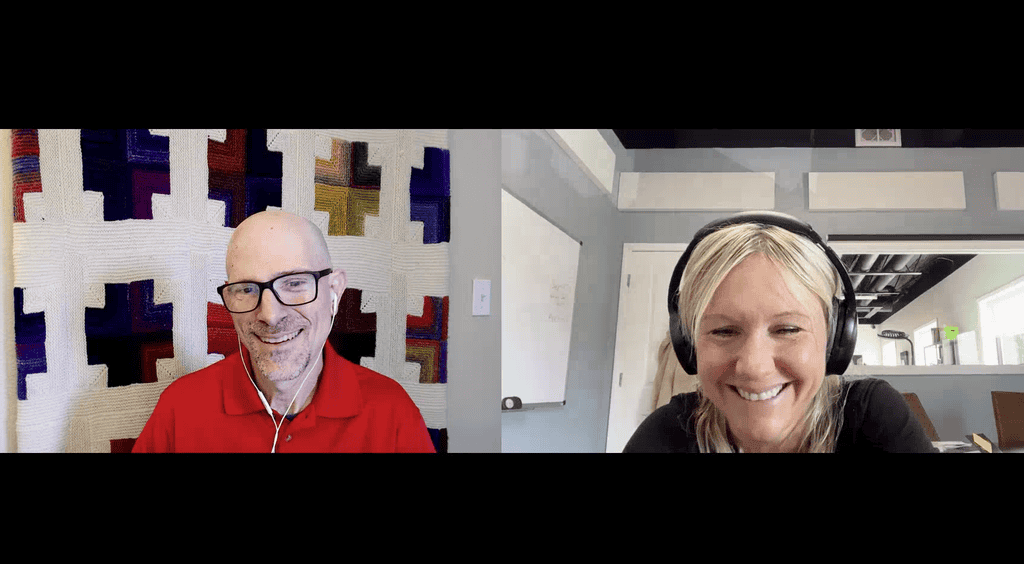
Danielle and her team help leaders in the HVAC, electrical, and plumbing trades run and build their businesses.
She’s especially passionate about rebuilding trust between homeowners and contractors.
Our conversation prompted me to write a LinkedIn post asking what’s behind that lack of trust that is, sadly, all too common.
The responses were really interesting and insightful.
Alex Crump, Vice President of Service at Harlister Mechanical, pointed out that customers often have no way to know whether what they’re being told is true.
They can’t see a failed capacitor. They don’t know what a compressor should sound like. They may not understand why a part they found online for $20 costs $300 when a qualified technician installs it.
Alex’s advice was straightforward:
“Show the problem, explain the value and give people options.”
Mike Payne, President & Owner of Hill Manufacturing & Fabrication, raised another part of the problem.
“We’ve spent decades telling people that working with your hands is somehow less valuable than working behind a desk.”
As Mike put it, a four-year degree isn’t the only way to become a professional.
“Their classroom just looked different.”
I appreciate Mike’s perspective because he sees both the “blue-collar” and the “white-collar” views because of his background and the work he’s doing now.
Mike and I recorded an episode of his Buy the Numbers podcast last week, and we talked a lot more about this including how this impacts how he leads his team.
I’ll share our conversation with you when it goes live in a few weeks.
Kyle Bentley observed that a small percentage of contractors and customers take advantage of one another, but those stories receive far more attention than the countless “good and fair” transactions happening every day.
Jim Mayer suggested something I hadn’t considered.
When we don’t know how to repair the things we depend on, we may project our own insecurity onto the person who does.
All of this reinforced something I wrote in the original post:
Relationships are built on trust.
The stronger the trust, the better the relationship.
This applies with your coworkers, your spouse, and the contractors you hire.
And trust has to be mutual to be real.
It has to go in both directions.
A homeowner may wonder whether the technician is recommending a repair that’s actually necessary.
The technician may wonder whether the homeowner respects their expertise or intends to challenge everything they say.
An employee may wonder whether their leader trusts them to take ownership of an important assignment.
The leader may wonder whether that employee will follow through without being reminded.
We enter relationships with assumptions about other people.
Some of those assumptions come from experience. Others come from stories we’ve heard, stereotypes we’ve absorbed, or simple differences in how we approach work.
And those assumptions become especially important when pressure hits.
I recently joined Meredith Bell on her Grow Strong Leaders podcast for a conversation called “What Are You Built to Do?”
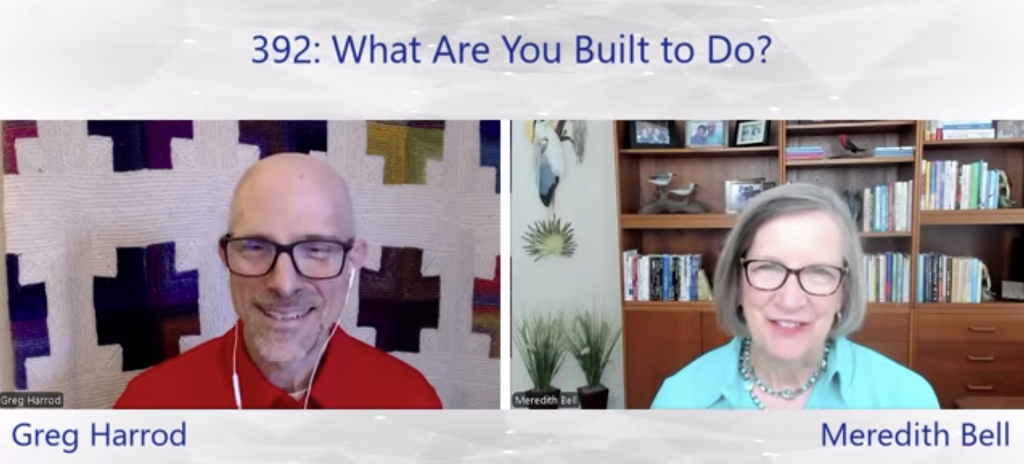
Meredith and I talked about the tendency leaders have to take work back from capable people when things get difficult.
We may tell ourselves we’re saving time or protecting an important result.
But sometimes what’s really being tested is our trust.
Do I trust this person enough to let them handle the assignment?
Am I willing to let them approach the work differently than I would?
Will I allow them to make mistakes and grow, just as I did?
Or will my need for control take over?
Those questions test our humility and vulnerability as leaders. They also reveal whether the trust we talk about when things are going well will survive when the stakes are higher.
That’s one of the many reasons I believe the Six Types of Working Genius framework is an incredibly powerful trust accelerator.
Working Genius gives us a simple way to understand how another person naturally contributes.
Someone with the Genius of Wonder may need time to explore the problem before discussing solutions.
Someone with Invention may begin generating ideas immediately.
Someone with Discernment may ask questions that sound skeptical when they’re actually trying to help identify the best answer.
Someone with Galvanizing may start rallying people before others feel ready to move.
Someone with Enablement may instinctively offer help but hesitate to state what they need.
Someone with Tenacity may keep pressing for completion when others aren’t ready to move on.
Without a shared understanding, these differences can create suspicion.
Why do they keep pointing out potential problems?
Why are they asking so many questions?
Why haven’t they started yet?
Why are they moving so fast?
Why can’t they let this go?
We can interpret a difference in wiring as a lack of competence, commitment, respect, or integrity.
Working Genius gives us another explanation.
It helps us say, “This person isn’t trying to derail the work. They’re contributing to it differently than I do.”
During my conversation with Meredith, I shared the story of a husband and wife who run a business together.
She would generate an idea and be ready to act. He would begin asking questions.
She assumed he was being negative and shooting holes in her ideas.
After we discussed their Working Genius results, she realized that his questions didn’t mean he opposed the idea. He was using his Discernment to help make it better because he wanted it to succeed.
Her words to him were, “I had no idea that you actually valued the idea.”
His behavior hadn’t changed.
Her understanding of his intent had.
And that new understanding increased the respect and trust between them.
Working Genius doesn’t create trust automatically.
People still have to tell the truth, do what they say they’ll do, admit their mistakes, and treat others with respect.
But it can help remove unnecessary suspicion so genuine trust has room to grow.
This becomes especially important when trust is tested.
Trust is tested when you give someone an important assignment and resist the urge to take it back.
It’s tested when a new leader joins the team.
It’s tested when a longtime client begins working with someone new in your company.
It’s tested when the customer questions your recommendation.
It’s tested when a mistake is made.
Those moments reveal whether the relationship is as strong as we assumed it was.
And every interaction that follows will either strengthen that trust or erode it.
If you’re leading a team, consider these questions:
Do your people know that you trust them?
Do you understand how they’re wired to contribute?
Do they understand why you ask the questions you ask?
Are you interpreting their differences accurately? Or are you assigning motives that aren’t there?
Your background influences how you view work.
It also influences how you view the people who do it.
Understanding those influences, and understanding one another, are important steps toward building stronger relationships.
Because trust can’t be demanded.
It has to be built.
And it has to go both ways.
You can listen to my complete conversation with Meredith Bell on the Grow Strong Leaders podcast here, or watch it here on her YouTube channel.
I’d love to hear your thoughts about what we talked about.
Helping you lead with kindness and confidence,
Greg
P.S. If you want to strengthen trust within your team and with your clients, my Leadership Clarity Accelerator small-group coaching cohort may be a good fit for you or someone on your team. You can schedule a call with me to talk more about it: https://gregharrod.com/schedule.
It’s filling up and I’ve moved the start date out a few weeks to match the schedules of those who will be in it. At this point, you can still grab a spot.
If you’d like to see any of my previous newsletter issues, you can find them here along with other articles. And, if you’re not getting my weekly newsletter and would like to, just enter your info here.

Greg Harrod
Greg Harrod is a Business Coach and Strategic Communications Partner. Follow GregHarrod.com to learn how you can build clear communication, aligned teams, and simple rhythms so your business runs smoothly. Greg will help you learn how to go from daily firefighting to calm, confident leadership by sharing his 30+ years of experience leading teams and businesses.
A quick note about affiliates
Some of the pages on my website contain affiliate links to products, apps, and services. If you click through and purchase, I may receive a commission on the sale and you pay no more. My policy is to only affiliate with products and services that I believe will provide value to you.