Burying Georgiana was not on my to-do list last Tuesday.
But that’s what Kiersten and I did because that’s what our business required from us.
Being a leader in a business, whether you’re the owner or an employee, is not easy.
You’ve had weeks that were harder than others, I’m sure.
And last week was a tough one for me.
Kiersten and I were unexpectedly faced with a situation we knew we’d have to deal with at some point in our Pemberley Woolworks business.
As livestock owners, it was inevitable. But that didn’t make it any easier.
Our experience was difficult, but it helped us develop as people and as leaders.
I learned some lessons I believe you can apply as you lead your people too.
You may be wondering who Georgiana is, and I owe you an introduction.
And that task that seems so simple demonstrates a leadership lesson you may find familiar:
Work relationships are complex
So who was Georgiana?
The answer isn’t as simple as it would first seem.
Georgie was a Valais Blacknose sheep.
You may remember from a previous article that we referred to her as the “queen bee of the flock.”
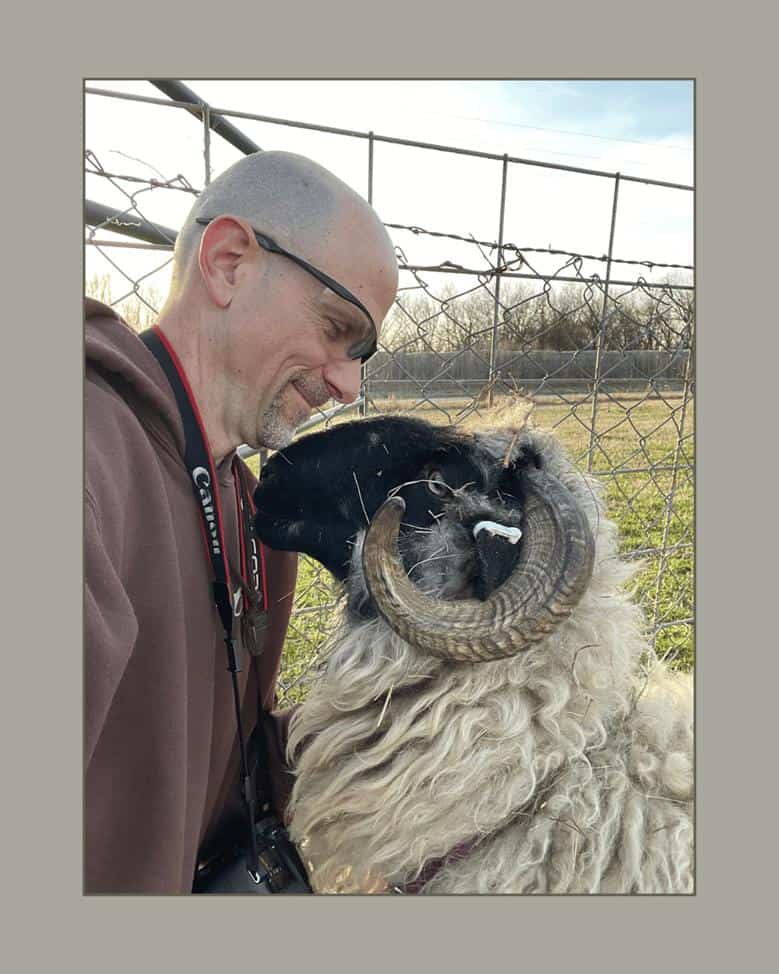
In our Pemberley Woolworks business, that meant she was a business asset.
Georgiana was a wool factory and sheep factory.
She produced wool and she produced lambs.
Georgie generated revenue for us.
But our business isn’t a traditional agricultural business.
In addition to selling wool-based products and lambs, we create content based on the experiences and stories of Pemberley Farm and the personalities of the animals.
So, unlike the flocks of hundreds of meat sheep you’ve seen grazing in pastures, all of the sheep in our wee flock have names.
And those names are intentionally and strategically based on characters in the classic books written by Jane Austen.
There’s a fascinating and powerful overlap in the worlds of literature, sheep, and fiber arts.
That’s a big part of why Kiersten has 1300+ subscribers who want to read what she writes about the goings on at Pemberley Farm.
Emotional connections are built through shared experiences.
This applies to connections between humans and between humans and animals, or business assets in this case.
The kind and compassionate responses to Kiersten’s email sharing the news of Georgiana’s death demonstrated this.
Like us, Kiersten’s readers had grown to love our pushy, nosy VBN team member.
Georgie was special to us.
Losing her left a hole at Pemberley Farm and a hole in our hearts.
We are experiencing pain and grief because of her death.
Those things are real and they have a real impact on us.
But sheep are not people.
And you lead people, not sheep.
So how can my experience help you?
Here are a couple of things that come to mind for me.
Acknowledge that your work relationships are complex too.
Some might say that Georgiana was “just an animal” and I shouldn’t have the feelings about her that I have.
That’s easy to say, but it’s not true.
I was attached to her. I liked her.
Even though she was just a sheep, she meant something to me in a way that’s not easy to explain.
That’s likely true for your work relationships too.
Based on my personal experience and my conversations with clients, things probably aren’t as cut and dried as they may appear from the outside.
For instance, I was in a room with the owner of a small business and his leadership team and I asked them to explain how they first met each other.
They gave me some odd looks, and then one of them said, “We’re all cousins. Well, most of us…”
The cousins had known each other their entire lives.
But a couple of them weren’t family members.
That’s not a simple work relationship.
It’s similar to businesses with owners who are married.
Or a father and his daughter who are partners.
Sometimes lifelong best friends start a business together.
The relationship dynamics can be intertwined and complex.
And that introduces real feelings and emotions that can be challenging and confusing, especially during times of loss.
I encourage you to remember this when you’re tempted to think that a situation should be more black and white than it is or that there’s one right approach to successfully navigate these tricky waters.
If only you were doing it the “right way,” things would be easy.
That’s not how it works.
Work relationships are almost always complex and a bit messy.
Leading yourself and your team isn’t simple.
So when it feels hard, it doesn’t mean you’re doing something wrong.
To make being a leader even more challenging, connections and interactions with and between people aren’t the only relationships you have to deal with.
It’s important to recognize that humans can feel attachment to non-human things too.
I don’t know what it is that creates the emotional connection we can have with non-human living things like sheep, but I know it’s real.
And I know that we can all become attached to non-living things too.
That piece of equipment you’ve relied on to do your job every day for the last ten years.
The software you have a love-hate relationship with.
The physical layout of your plant or office.
When those things change, you’re going to feel it.
When your favorite piece of equipment or software is replaced, you will experience a loss.
Upgrading your facilities may generate feelings of excitement and happiness because of the benefits you’ll get.
But you’ll likely miss the familiarity of what you were used to.
The same is true for the people you lead.
Change brings loss.
That’s not wrong. It’s natural.
Your people will feel seen and understood when you acknowledge this reality and speak directly to their loss associated with a change.
Even if the change involves non-human elements.
Georgiana wasn’t a human team member, but she was an important part of our Pemberley Woolworks business.
She’s gone now, so we’re adjusting and moving forward.
If you’re also dealing with changes and loss as a leader in your business and would like to have someone to compare notes with, let’s talk.
You’re welcome to schedule a complimentary coaching call with me using this link and I’ll do my best to support and encourage you.
Helping you lead with kindness and confidence,
Greg
P.S. Are you ready to stop doing work your team is ready to own? This Friday I’m hosting a live coaching session where we’ll talk through real scenarios related to this question: Why Won’t My Team Take More Ownership?
It’s a chance for leaders to talk with each other and share their experiences and insights.
It’s one hour and it’s free. If you’d like to join us, just reply and I’ll add you to the Teams invitation.
P.P.S. I had a great conversation recently with Corey Harlock on his Scale from Here podcast. If you feel like every decision in your business still has to run through you, you’ll find this conversation helpful.
Listen on Apple Podcasts: https://podcasts.apple.com/us/podcast/youre-not-a-control-freak-you-just-never-learned/id1643962763?i=1000797240469
Watch on YouTube: https://www.youtube.com/watch?v=ToEHMtOIkvE

If you’d like to see any of my previous newsletter issues, you can find them here along with other articles. And, if you’re not getting my weekly newsletter and would like to, just enter your info here.

Greg Harrod
Greg Harrod is a Business Coach and Strategic Communications Partner. Follow GregHarrod.com to learn how you can build clear communication, aligned teams, and simple rhythms so your business runs smoothly. Greg will help you learn how to go from daily firefighting to calm, confident leadership by sharing his 30+ years of experience leading teams and businesses.
A quick note about affiliates
Some of the pages on my website contain affiliate links to products, apps, and services. If you click through and purchase, I may receive a commission on the sale and you pay no more. My policy is to only affiliate with products and services that I believe will provide value to you.