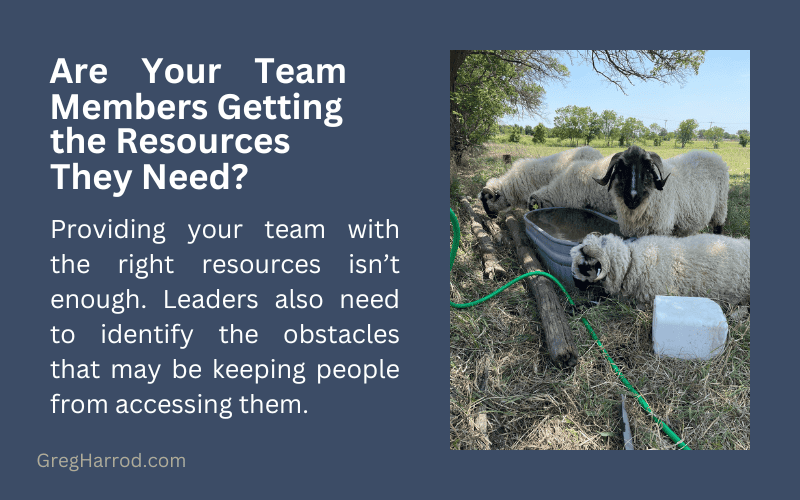
Heads up. This week’s newsletter is going to be a little different than you’re used to.
I’m still going to share my thoughts on developing your people so your business can grow. But you’re also going to see a bunch of pictures of our sheep.
Because apparently, I can’t watch these creatures without thinking about leadership lessons I want to share with you.
I’ll start with the back story.
Last week I was standing in our pasture making sure our sheep had water because it was like 104 or 105F.
That was the real temperature. I don’t know what the “feels like” temperature was but I didn’t need a jacket. It was not chilly.
And when it’s that hot, one of the most valuable resources for a sheep is water.
So I ran down there in the middle of the day between meetings to top off their water tank.
Here’s what I saw.
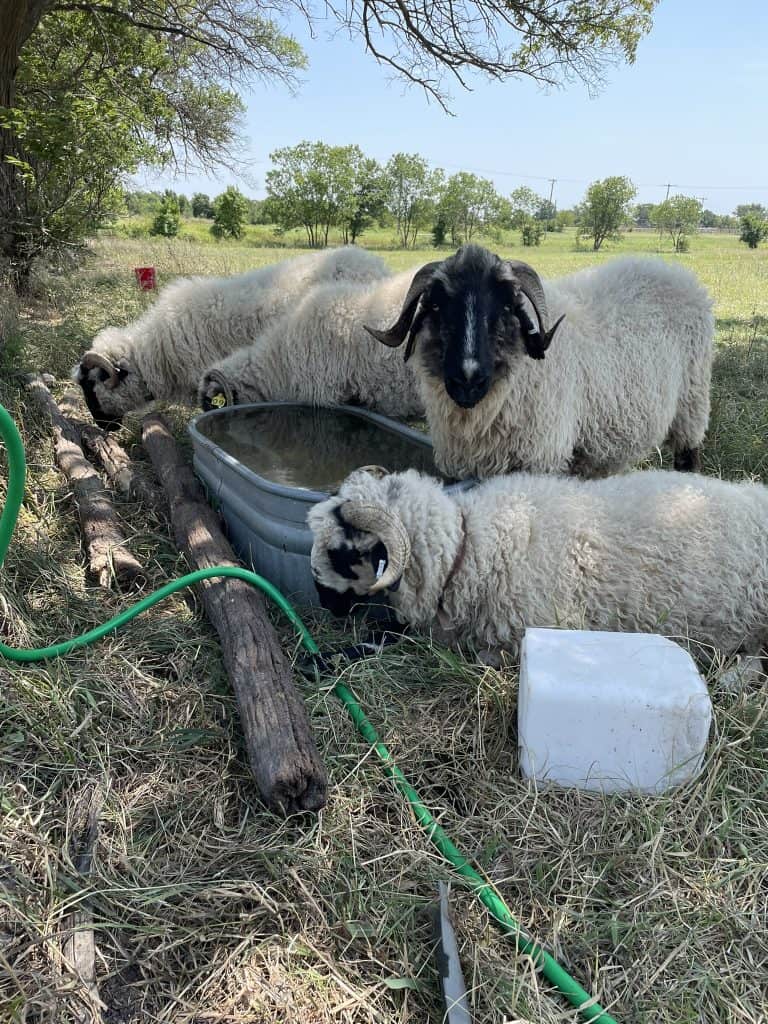
That’s Jane and Charlotte in the back. Georgiana, the queen bee of the flock, is facing the camera. And Kitty’s lying down in the front.
It takes a while for the water that’s scalding hot because it’s been baking in the 300 feet of hose strung across the pasture between the hydrant and the tank to cool off.
So I had some time to think.
I started comparing the sheep scene in front of me to our work environments.
That water tank reminded me of various resources that are valuable to the people on our teams.
High-visibility projects, meaningful work assignments, career-building relationships, and opportunities to be in the spotlight came to mind.
The employees entrusted to our care need these things to thrive and flourish.
Similarly, this water tank was exactly what these four big, wooly Valais Blacknose ewes needed.
Based on this picture, you might assume that Kiersten and I had provided for our sheep and they were well cared for.
I’m confident you make every effort to do the same for your team members. You’ve likely given them the resources they need to be successful in their work.
A reasonable assumption is that all is well, right?
Our sheep are good. Your people are good.
All is well, right?
I can’t speak for you, but that wasn’t the case for our sheep.
These four ladies were just fine. But we didn’t have just four VBNs in this pasture.
We had eleven other sheep in there too.
Including Martin.
The little guy in the back.
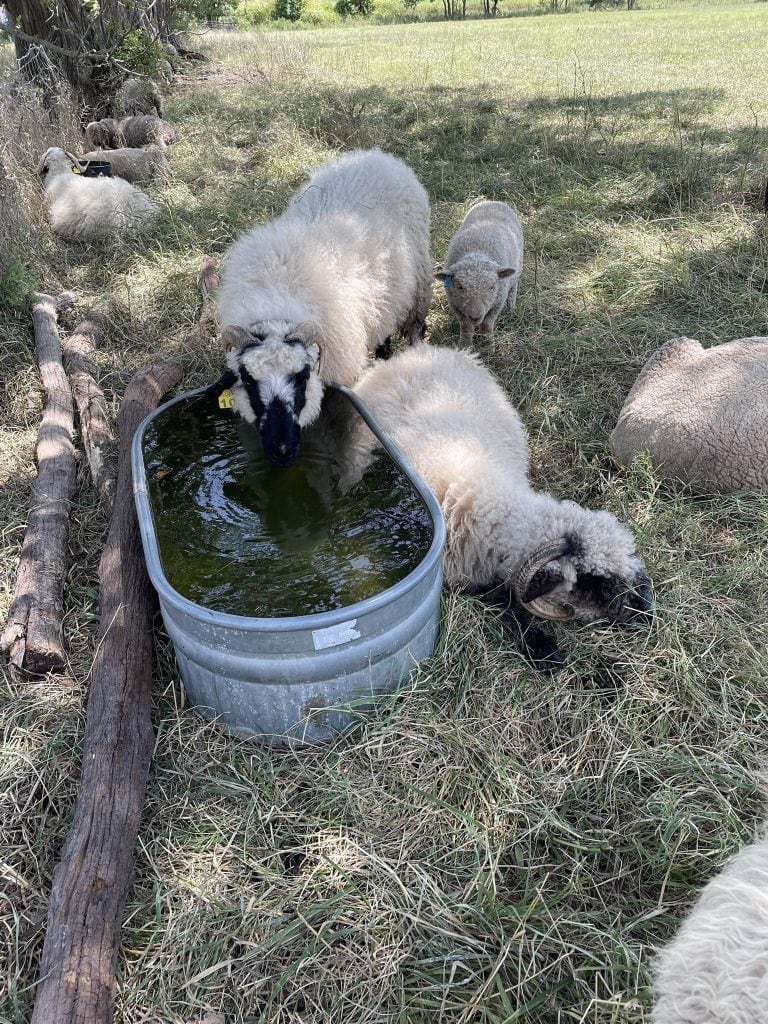
Martin’s a Babydoll. And while he’s still a lamb, this is about as big as he’s going to get.
The adult Babydolls in the pasture are roughly the same height.
And that disparity in size compared to Jane and Charlotte who were between him and the water he needed got my leadership wheels turning.
The parallels between our sheep at Pemberley Farm and the people we lead were jumping out at me like crazy.
So I decided to share my takeaways in the form of questions we can ask ourselves when we’re leading our teams.
The first question is about what I can do as a leader to understand the situation and make improvements.
Can I identify and remove obstacles between my employees and the resources they need to be successful?
Study the first picture for a moment.
Here’s what I observed as I was wiping gallons of salty sweat off my face.
Our sheep needed to have access to the salt block (the white square in the foreground). But it didn’t need to be where I had placed it. It was partially blocking access to the water tank. So I moved it as you can see in the second photo.
Then I saw those hedge fence posts. They made it difficult for sheep to get to the north side of the tank. They also didn’t need to be right there. Once that dawned on me, I moved them too.
Do you see the green hose? My decades of safety training tells me that’s a trip hazard. Probably not for sheep, but I can’t not see that. So I fixed that too.
Repositioning those inanimate objects is easy.
But what about those other two massive structures between Martin and the big water tank?
Jane’s not a small girl and Charlotte’s got her big ol’ self plopped right up against the tank. (More on that later.)
How is that impacting Martin?
The reality for this flock and our teams is that living, breathing creatures can be obstacles too.
That leads us to our next question.
Are some of my team members blocking others from getting what they need?
From one perspective, everything seemed fine at the pasture tank. Four ewes had the water they needed.
But when I took a different vantage point, I discovered that they were blocking Martin.
He couldn’t easily walk up and drink from the water tank.
This can be true with our teams.
A small group of high performers may be crushing it with an important project. But they aren’t allowing any other team members to contribute.
They’re so busy delivering results themselves that they aren’t taking time to develop others who are less experienced. They may not be sharing their knowledge so others can take their place when they’re out of the office or when they leave the company.
Your initial view may not be complete. So your first assessment that everything is great may not be accurate.
You may still have a gap that’s growing and will result in bigger problems in the long run.
So, as leaders, what actions can we take?
Start by asking this question.
Do I fully understand why my team members are doing what they’re doing?
Based on my experience, the answer is almost always no.
Since that’s the case, be curious and seek to understand your people more deeply before you take action.
You might consider talking with others to get their perspectives.
My wife, Kiersten, is an excellent thought partner for me. Her Working Genius pairing is Wonder and Enablement so she’s constantly observing the world around her. She pays careful attention to what’s going on and sees things others (including me) often miss.
So I showed her this photo I took a little bit after the previous ones to get her take.
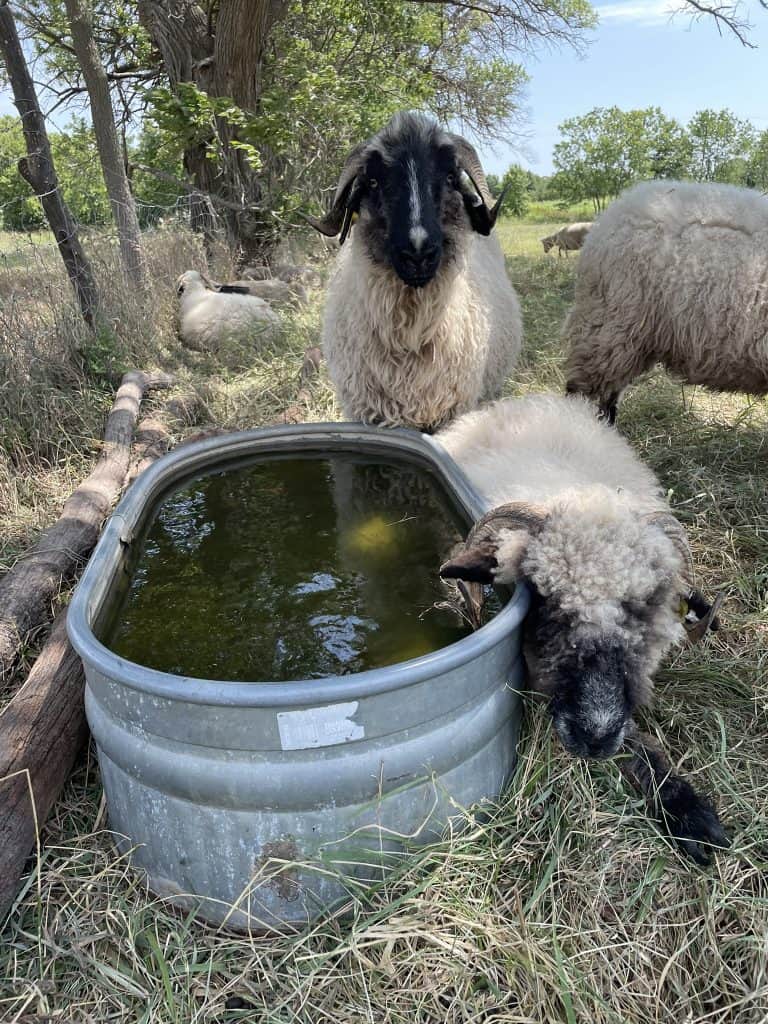
I told Kiersten that my initial reaction toward Charlotte was not charitable.
What I wanted to yell was something like:
“Move you big loaf of wool! Let the rest of the flock get a drink!”
Thankfully, I paused before opening my mouth.
Slowly I realized that Charlotte might not be so inconsiderate after all. And maybe more clever than I thought she was.
Perhaps I didn’t have all the information and my first point of view wasn’t the only perspective to consider.
It turns out that was true.
As Kiersten and I spent time being curious about the behavior of the sheep around the water tank, she added her questions to mine.
Were the Valais ewes intentionally guarding the water and keeping the smaller sheep away from it? (My observation of Georgiana butting Martin when he tried to take a drink and her track record of being persistently pushy strongly supports this theory.)
Or, were they just there to get a drink and didn’t even realize they were in the way?
When I considered Kiersten’s questions and slowed down my thinking to be more objective, I realized Charlotte had learned that the office “water cooler” really was a cooling device for sheep.
She had found a way to stay cool during a blazing hot August afternoon.
Despite a concussion a few months back and ongoing, long sessions of staring off in the distance (Kiersten and I affectionately labeled her as our sheep who talks to angels), Charlotte might actually be the smartest sheep in the flock.
I don’t know how sheep brains work and am learning about their social patterns, but I started having questions.
Had she somehow offered her spot to the other sheep and they refused?
Was she modeling so the other sheep would follow her example?
Or was she just selfishly keeping the cool tin to herself?
The look on Georgie’s face could be interpreted as a vote for the last option and a plea for me to do something so she could have a turn.
These are sheep, not people so I’ll never know.
But our team members aren’t sheep.
We can talk to them.
We can approach them with genuine, sincere curiosity.
And we can ask them questions to learn more about their reasoning and motivation for doing what they do.
The chances are good that we’ll learn more about them, the relationships they have with others on the team, and ourselves in the process.
So, I encourage you to stay curious and open-minded and learn all you can from your people.
We all have biases that shape how we think and act.
Which leads into another leadership question that I’ll cover in next week’s email.
Until then, I encourage you to look again at these pictures from our farm and consider the people who are under your care.
What leadership lessons come to your mind?
I’d love to hear them and see how they compare to the other thoughts I had and will share next week.
Helping you lead with clarity and confidence,
Greg
P.S. Later this week, I’m hosting a free 60-minute session called Why Does Everything Still Depend on Me where I’ll help leaders think through why work, decisions, and responsibility keep flowing back to them and what they might do differently.
It’s a live discussion for a small group of leaders to walk through the real situations they’re dealing with. I won’t do any formal presentation or teaching.
I’ve got a few spots left so reply to this email and I’ll include you if you’re interested.
Those who’ve attended these live workshops in the past have had good things to say, so I encourage you to grab a spot now while there’s space.
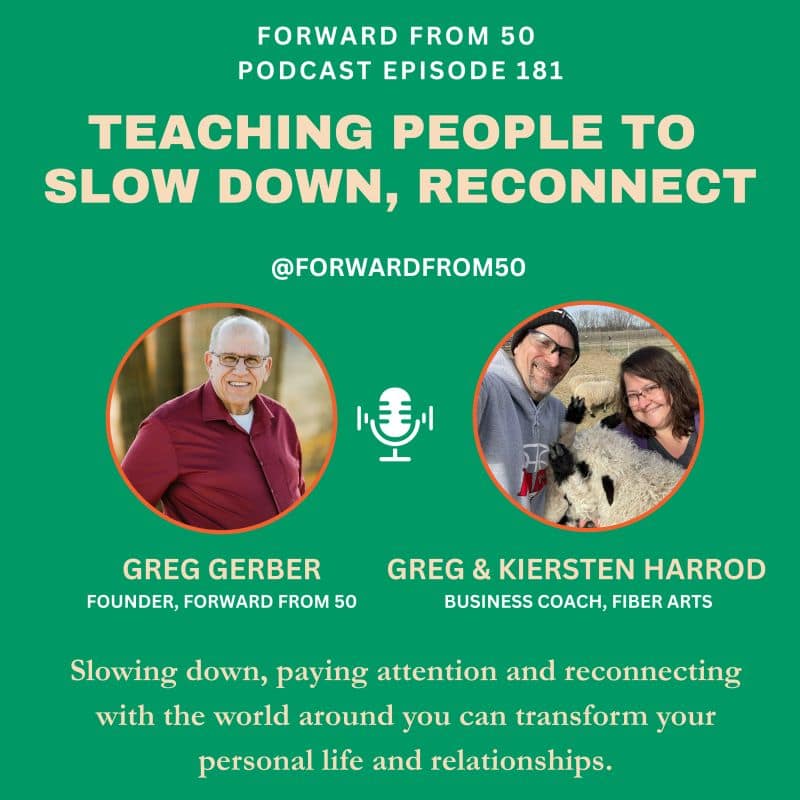
P.P.S If you’re interested in learning more about our sheep and the Pemberley Woolworks business Kiersten leads for us, you’re welcome to listen to our conversation with Greg Gerber on his Forward from 50 podcast. Greg’s an excellent host and a kind, gracious man.
If you’d like to see any of my previous newsletter issues, you can find them here along with other articles. And, if you’re not getting my weekly newsletter and would like to, just enter your info here.

Greg Harrod
Greg Harrod is a Business Coach and Strategic Communications Partner. Follow GregHarrod.com to learn how you can build clear communication, aligned teams, and simple rhythms so your business runs smoothly. Greg will help you learn how to go from daily firefighting to calm, confident leadership by sharing his 30+ years of experience leading teams and businesses.
A quick note about affiliates
Some of the pages on my website contain affiliate links to products, apps, and services. If you click through and purchase, I may receive a commission on the sale and you pay no more. My policy is to only affiliate with products and services that I believe will provide value to you.