What do you do when one of your direct reports unapologetically says this to you?
“I was born bossy.”
I’ll tell you what I did, but first I’d like you to see how another successful business leader handled it.
Check out this hilarious 90-second video that delivers some solid leadership wisdom along with some laughs.
My Takeaways from the Video
I recognize that this playful video is not a documentary of the actual inner workings of Hoidale.
But we can still learn some leadership lessons here. Here are 3 that stood out to me.
- Alexa’s coworkers show appreciation for her natural gifts. This appears to be true of the person she reports to, her peers, and those at a lower level in the organization (I really dislike that term, but I trust you know what I mean), and even contractors like the guy recording the video.
- The people being “bossed” by Alexa didn’t take offense. They trusted her and followed her directions. They acted for the good of the company without getting defensive. This may have been acting, but it’s likely the result of building a strong team and the right culture in the organization.
- Alexa doesn’t “stay in her lane” when applying her talents. At the end, she saw and took an opportunity to add more value to the business even though, I assume, she’s not responsible for marketing.
I don’t have direct experience with the Hoidale team, but I learned a lot about their core values and positive culture in this Wichita Chamber of Commerce podcast episode.
Steve Dixon, their CEO, talks about his leadership beliefs and desire for his people to thrive so they can go home to their families in a good mood and have the energy to do the things they need to do at home.
With that background, I can’t help but think the positivity captured in that short video is not just for the camera.
Alexa and her coworkers seem to truly enjoy what they do.
I’m curious if Alexa reminds you of anyone on your team?
The answer is definitely Yes for me.
My Experience with a “Bossy” Team Member
Alexa is a lot like a woman who was on my team.
Let’s call her Georgiana. (If you’re curious why I picked that specific name, keep reading to the end.)
The bossy woman who reported to me didn’t self-proclaim her bossiness like Alexa did. She presented third-party confirmation.
Here’s how she said it.
“My kindergarten report card said:
“Georgiana is bossy to the other children”
Georgiana’s kindergarten teacher
Which she recently explained to me meant, “….umm, let’s get aligned, folks, and get stuff done!”
Who wouldn’t want Georgiana on their team!
Unfortunately, too many leaders.
They might see Georgiana’s natural tendencies and abilities as liabilities, not assets.
A “Bossy” Team Member – from a Negative Perspective
They might use even more negative terms than “bossy” such as:
- Harsh
- Dismissive
- Aggressive
- Controlling
- Ego-Driven
- Overbearing
- Disrespectful
- Self-Focused
Those descriptions certainly don’t paint a picture of someone I would want on my team.
A “Bossy” Team Member – from a Positive Perspective
In contrast, “bossy” can also be replaced with words like:
- Clear
- Driven
- Decisive
- Assertive
- Proactive
- Confident
- Self-starter
- Action-oriented
Those are obviously more appealing.
You’re likely reading those lists and thinking of someone you work with. Maybe someone on your team.
If that’s the case, I have a question for you.
Which of These Describe Your “Bossy” Team Member?
How many of those negatives and positives are true of the Alexa or Georgiana on your team?
I suspect all of them to some degree.
Each “bossy” person is unique with their own combination of positives and negatives, with behaviors like these coming out at various levels of intensity.
So that leaves you with a choice if you have a direct report who is “bossy”.
Your Choice as a Leader
When you have a “bossy” person on your team, you can focus only on the negative aspects.
You can show them all the unfavorable comments they received in their 360 feedback reports and tell them they need to fix these problems.
Tell them that these are their weaknesses they need to improve.
I don’t recommend this approach.
Or you can point out only the positive side of their bossiness.
Encourage them to keep pushing people to deliver results whether the folks they’re driving (who should be doing their jobs anyway) like it or not.
This is also not what I suggest.
Here’s what I DO believe is good leadership for a bossy person on your team.
How to Lead a “Bossy” Team Member – Techniques that Work for Me
Here are some ideas of what worked for me and Georgiana. You might want to try them too.
1. Don’t Expect or Require Them to Change Who They Are
I’m a firm believer that leaders who don’t ask their team members to change who they are will be more successful than those who require the people entrusted to their care to turn their inherent “weaknesses” into forced “strengths”.
None of us can change who we fundamentally are.
And when we try to do what we’re not made to do, there’s going to be friction.
It’s like rubbing your hand the wrong way on a piece of wood.
When you go against the grain, you’re going to get splinters.
Having said that, leaders must help their people develop emotional intelligence and situational awareness, so they are more effective teammates.
2. Help Your “Bossy” Team Member Know the Stories Others Tell about Them
I love the book Your Leadership Edge, written by my friends Ed O’Malley and Amanda Cebula when they were with the Kansas Leadership Center.
The chapter titled “Know the Story Others Tell About You” includes this statement:
“Knowing how others perceive you – or being able to imagine how they might perceive you – helps you be more effective. You can better adapt to the situation and experiment more wisely.”
– Your Leadership Edge
Ed and Amanda point out that this concept is NOT “know the story others tell about you and change”.
The point is not to change who you are, but to use this information to better manage yourself.
So how can you apply this approach when you have a “bossy” person on your team?
3. Talk Openly and Candidly about their “Bossiness”
A conversation like this often allows you to talk more openly and candidly about the positive and the negative realities of who they are and how they’re made.
You can help this person understand the tremendous value they bring to your team and business with their bossiness they’ve had since they were a child.
This helps create a psychologically safe environment where you can together discuss what is actually true, not what you or they wish was true.
By helping this person see their bossiness as what it is, both good and bad, you free them up to share with you how their default behaviors have produced positive and negative outcomes with their projects and relationships with their coworkers.
You can discuss how they might approach a person who is also wired similarly in one way, but take a different approach with a person who thinks and works differently.
For instance, they may need to change their communication style but they don’t have to, and shouldn’t, change who they are.
Some situations may require them to turn down their intensity to be more effective.
While at other times, leaning into their burning desire to light a fire under some people’s behinds is the right thing to do.
As their leader, you can help them experiment and improve.
You can assure them that you believe in them and trust them to act with positive intent. Even when they screw up.
4. Believe in Your “Bossy” Person Even When They Don’t Get it Right
Georgiana didn’t always get it right.
But most times she did.
I was grateful to have the privilege of being her leader for part of her career.
And Georgiana keeps getting better because she continues to learn about herself and her teammates and change her behaviors to improve.
I suspect the same is true for Alexa.
With your thoughtful guidance, I’m confident that the “bossy” person on your team can do the same.
I’m curious if you can name the “bossy” person on your team?
Do you now have some ideas on how you can help them be an even more effective contributor for your business?
I hope you do through the lessons I learned from the video about Alexa and my personal experience with Georgiana.
Which brings me back to the promise I made you about the origin of this fictional name.
Why the Name Georgiana?
As you might have guessed given the Jane Austen-esque name Georgiana, it’s another sheep story from the Pemberley Woolworks business Kiersten and I have.
Kiersten describes Georgiana as “the boss-lady of the flock.”
In other words, Georgiana thinks she’s in charge of the 14 other ewes.
In her eyes, they report to her, and so do Kiersten and I!
In fact, Monday morning after we changed the Sunday evening feeding and watering schedule slightly, Georgiana scooted the other ewes out of the barn into the pasture and turned directly to Kiersten.
According to Kiersten, it was as if Georgiana was demanding an explanation for the disruption to the routine. She wanted to know why her plan for her flock was changed.
So, of course, Kiersten explained it to her.
Because Georgiana is “bossy”.
And we love her, not in spite of how she’s made, but because of it.
What Makes Your Life Unique and Interesting?
I hope my stories of our sheep and fiber arts education business adventures and learning don’t distract you from getting value from the leadership insights I share.
If they do, please let me know. And, if you enjoy them, please share that feedback with me as well.
What do you do outside of your business leadership work?
I’d love to hear what makes your life unique and interesting!
Helping you lead with clarity and confidence,
Greg
P.S. Last week on LinkedIn I talked about
When and Why Leading Starts Feeling More Like a Burden than a Privilege
Leadership Lessons from the Wichita State Basketball Game
Optimizing for What’s Most Important in Your Business
How Leaders Can Get Relief from Guilt and Shame
If we’re not already connected on LinkedIn, just reply to this email with the word “LinkedIn” and I’ll send you a connection request to save you some time.
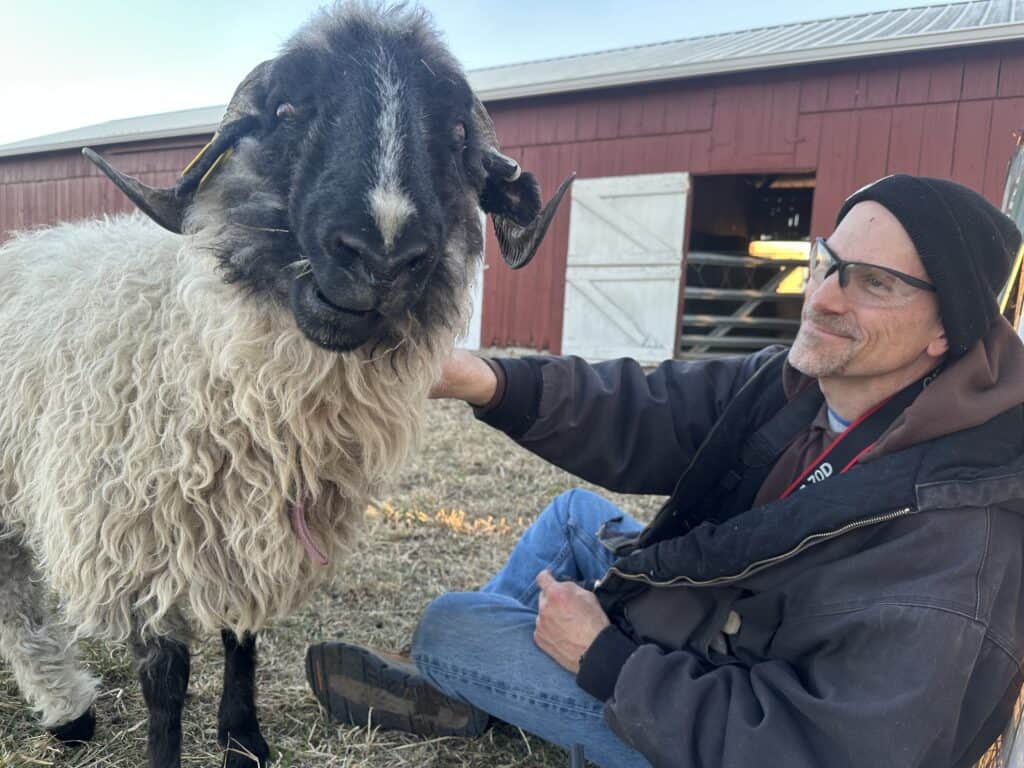
P.P.S. Here’s a photo of Georgiana. Does she look bossy to you?
If you’d like to see any of my previous newsletter issues, you can find them here along with other articles. And, if you’re not getting my weekly newsletter and would like to, just enter your info here.

Greg Harrod
Greg Harrod is a Business Coach and Strategic Communications Partner. Follow GregHarrod.com to learn how you can build clear communication, aligned teams, and simple rhythms so your business runs smoothly. Greg will help you learn how to go from daily firefighting to calm, confident leadership by sharing his 30+ years of experience leading teams and businesses.
A quick note about affiliates
Some of the pages on my website contain affiliate links to products, apps, and services. If you click through and purchase, I may receive a commission on the sale and you pay no more. My policy is to only affiliate with products and services that I believe will provide value to you.