This article is part of an email series covering the results of the 2025 Wichita Industrial Trade Show (WITS) Leadership Pulse Survey. If you missed any of the emails in the series, you can see them all here. And, if you’re not getting my weekly newsletter and would like to, just enter your info below.
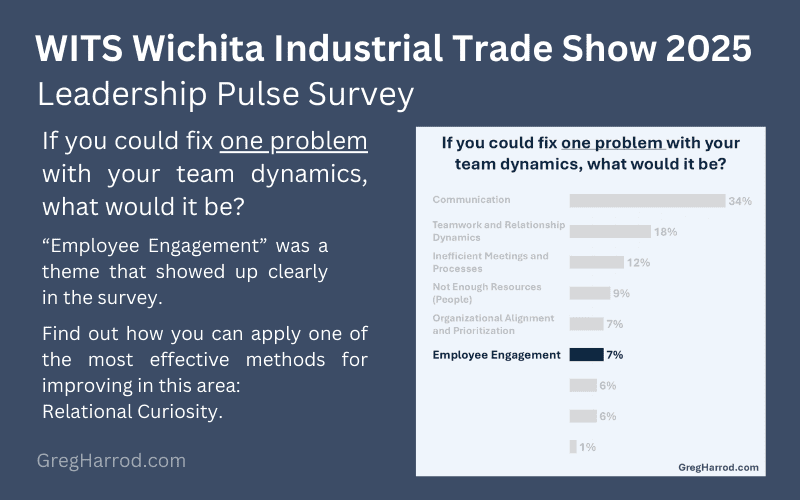
“Employee Engagement” was a theme that showed up clearly in the responses to the question, “If you could fix one problem with your team dynamics, what would it be?” on the 2025 Wichita Industrial Trade Show Leadership Pulse Survey.
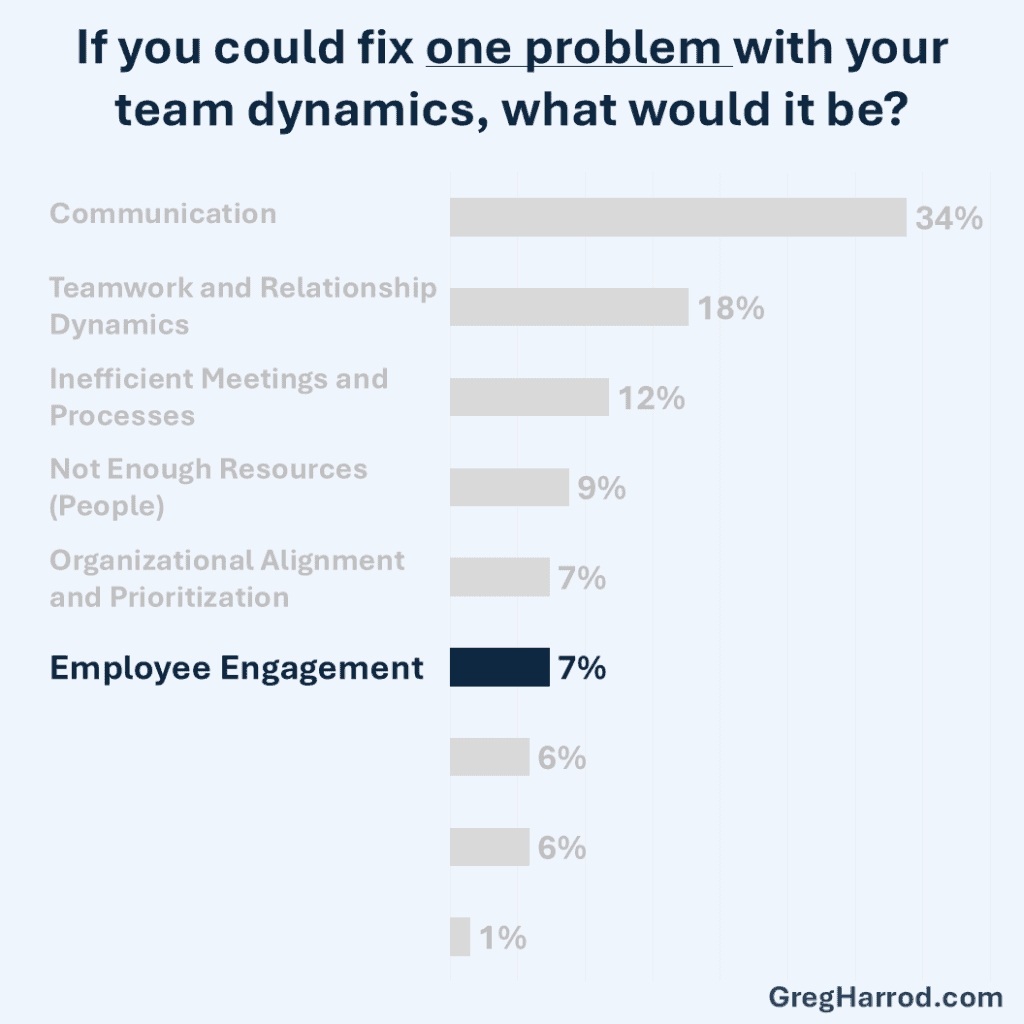
If you could fix one problem with your team dynamics, what would it be?
Here are some of the exact words leaders used:
- “Employee engagement”
- “Folks taking ownership”
- “Everyone staying engaged”
- “Scheduling for the team to ensure full engagement”
If you’ve ever found yourself thinking, “Why don’t they care like I do?” or “Why do I feel like I’m carrying this business all by myself?” you’re not alone.
But here’s the important distinction I want to offer:
Employee engagement isn’t something you demand. It’s something you create.
And one of the most effective ways leaders create engagement is through something called Relational Curiosity.
Employee Engagement Grows Where Curiosity Replaces Assumptions
Most leaders are already intellectually curious. And I expect you are too.
You want to understand:
- the numbers
- the problems
- the processes
- the constraints
That kind of curiosity helps businesses run.
But when it comes to engagement, research and experience point to a different kind of curiosity that makes a significant difference: Relational Curiosity.
Relational Curiosity is not about getting answers faster.
It is about genuinely trying to understand your people.
By staying humble and asking the right questions, you can learn:
- how they experience their work
- what feels unclear or risky to them
- why they are so afraid of making mistakes
- where they feel ownership, and where they don’t
In a Coaching for Leaders podcast episode Shannon Minifie, CEO of Box of Crayons, and host Dave Stachowiak talked about the difference between Intellectual Curiosity and Relational Curiosity.
Both types of curiosity are valuable for business leaders to apply, but they’re different.
They differ in who they serve.
Intellectual Curiosity is primarily about serving ourselves. We have a lack of knowledge, and we’re trying to fill that gap.
That’s good, but for leaders who are striving to have a successful business fueled by highly engaged employees (and less stress and pressure on themselves), Relational Curiosity is an even better approach.
Relational Curiosity shifts the focus from serving ourselves to serving those we’re leading.
In other words, Intellectual curiosity helps us learn what we don’t know. Relationship curiosity helps the other person learn what they don’t know.
This increased understanding within our employees will not only increase their level of engagement. It will also increase the amount of ownership team members feel.
Employee engagement and an ownership mindset are directly related.
Why Engagement Often Looks Like an Ownership Problem
The survey responses mentioned ownership directly.
That’s not accidental.
People tend to take ownership after they feel:
- trusted
- understood
- safe enough to speak honestly
When those conditions aren’t present, engagement fades, even among capable and well-intentioned people.
Of course, leaders don’t usually cause disengagement intentionally.
But the reality is this, disengagement grows quietly when:
- efficiency is valued more than understanding
- leaders move too quickly from listening to giving advice
- questions are asked to confirm opinions rather than explore perspectives
I’ve been guilty of all of these throughout my career.
My intentions were typically good. I was doing my best to motivate my teams to help them focus and deliver results.
However, I was actually taking on too much responsibility and putting an unnecessary amount of pressure on myself as the “leader”.
What I should have been doing instead was trusting my team more and investing my energy into helping them discover what was inside of their minds and hearts then coaching them to take action with courage and confidence.
It seems easy enough now in retrospect. But it’s not so easy in the heat of the moment when you’ve got a business to run and customers to keep satisfied.
If I could go back to those moments when I wasn’t as Relationally Curious as I could have been, here’s what I would do.
You may find this helpful to try with your team this week too.
A Simple Way to Practice Relational Curiosity This Week
Here’s one practical step you can take immediately.
In your next one-on-one or team conversation, ask one of these seven questions and then stay quiet long enough to really hear the answer:
1. The Kickstart Question: “What’s on your mind?” A perfect way to start many conversations. Both open and focusing at the same time
2. The AWE Question: “And what else?” The best coaching question in the world – because their first answer is never their only answer, and rarely their best answer.
3. The Focus Question: “What’s the real challenge here for you?” We’re all wasting too much time and effort solving the wrong problem because we were seduced into thinking the first challenge is the real challenge.
4. The Foundation Question: “What do you want?” This is where motivated and informed action best begins.
5. The Strategy Question: “If you’re saying Yes to this, what must you say No to?” Strategy is about courageous choice, and this question makes commitment and opportunity cost absolutely clear.
6. The Lazy Question: “How can I help?” The most powerful question to stop us from “rescuing” the other person. An alternative is “What do you want from me?”
7. The Learning Question: “What was the most useful or valuable for you?” Learning doesn’t happen when you tell them something, it happens when they figure it out for themselves.
Then:
- don’t correct
- don’t defend
- don’t solve immediately
Just listen.
That single shift, from fixing to understanding, often unlocks more engagement than another meeting, metric, or motivational speech.
When Leaders Want Help Applying This
Many leaders tell me they like ideas like Relational Curiosity, but they are not always sure how to apply them consistently in real conversations, real meetings, and real pressure.
That is where having a thought partner can help.
Sometimes the most valuable part of coaching is not advice. It is having someone help you slow down your thinking, ask better questions, and see patterns you are too close to notice on your own.
If that sounds useful, I am always happy to start with a simple conversation. No pressure. Just clarity.
A Question for You
Where do you think Relational Curiosity might make the biggest difference in your leadership right now?
If you’re willing, hit reply and tell me what you’re noticing with engagement on your team. I read every response myself.
Helping you lead with clarity and confidence,
Greg
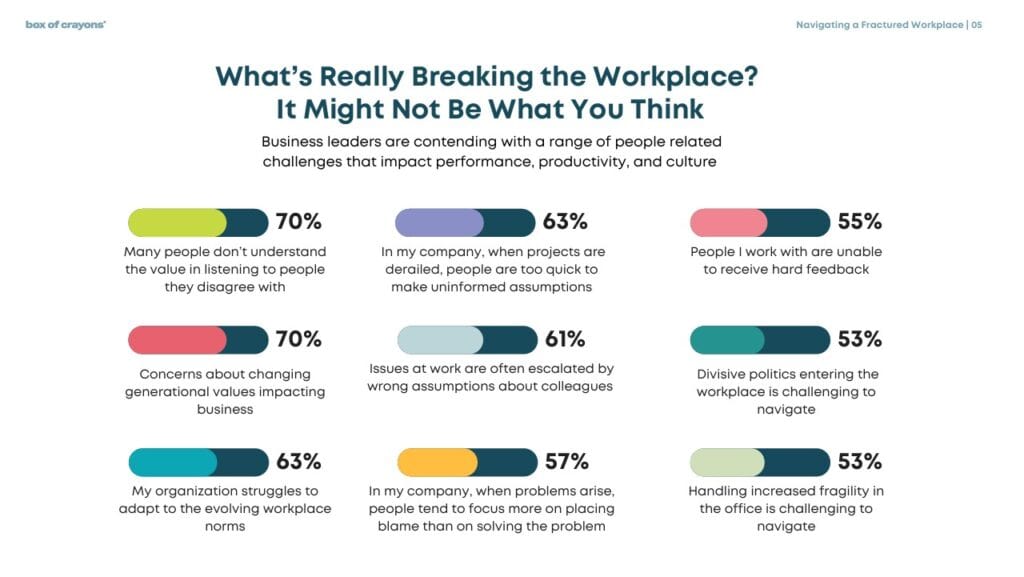
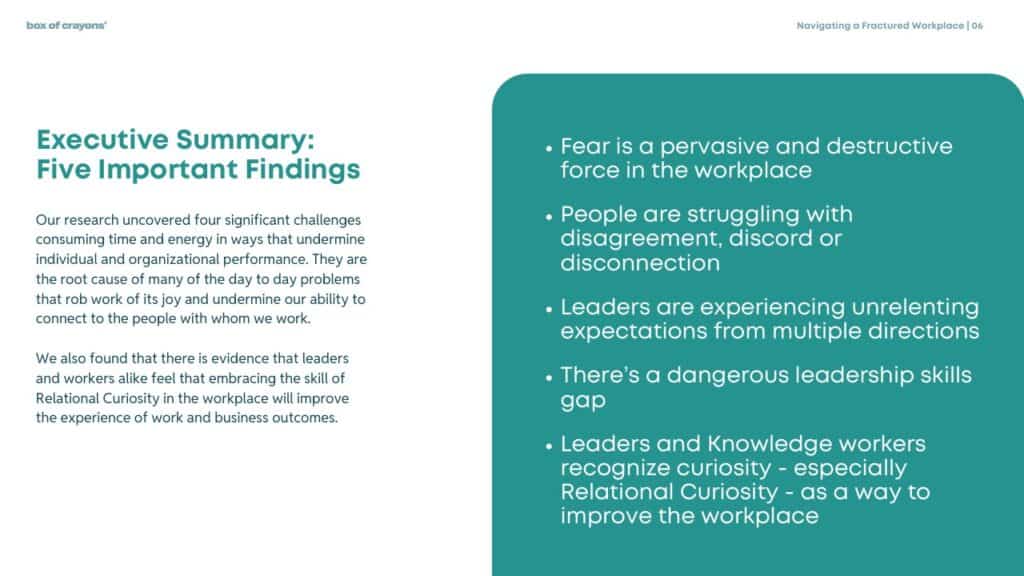
P.S. The podcast episode I mentioned above also covers the results of recent research from Box of Crayons which shows that leaders and employees alike see Relational Curiosity as a powerful way to increase engagement, trust, and productivity in today’s fractured workplace. You can download the full white paper at no cost to you here if you’re interested. I found it extremely insightful in explaining many of the challenges leaders are facing in all types of industries and businesses today.
Here are a few snapshots of what intrigued me in the report.
- Organizations Only Work If People Work – Companies with strong workplace relationships are 2.5 times more likely to be innovative and see 50% higher total shareholder returns. Employees in these environments are more engaged and productive, and report greater job satisfaction.
- Leadership efficiency comes at the cost of clarity – 63% of Business leaders admit that their company’s push for efficiency often comes at the cost of clarity, a concern echoed by 54% of Knowledge workers. As a result, employees spend a significant amount of time being ineffective in the workplace, costing businesses thousands per employee per year.
- Business leaders and Knowledge workers recognize the power of Relational Curiosity – Prioritizing Relational Curiosity could lead to real, tangible benefits—especially in repairing the cracks in workplace culture. 69% of Knowledge workers and 50% of Business leaders see fostering Relational Curiosity as a way to significantly enhance communication. While 87% of Business leaders and 89% of Knowledge workers think Relational Curiosity gives individuals the space they need to grow and evolve their careers
P.P.S. Full credit for the seven questions above to Michael Bungay Stanier and his books “The Coaching Habit: Say Less, Ask More, & Change the Way You Lead Forever” and “The Advice Trap: Be Humble, Stay Curious, & Change the Way You Lead Forever.”. I use both of these books regularly and highly recommend them!
This article is part of an email series covering the results of the 2025 Wichita Industrial Trade Show (WITS) Leadership Pulse Survey. If you missed any of the emails in the series, you can see them all here. And, if you’re not getting my weekly newsletter and would like to, just enter your info here.

Greg Harrod
Greg Harrod is a Business Coach and Strategic Communications Partner. Follow GregHarrod.com to learn how you can build clear communication, aligned teams, and simple rhythms so your business runs smoothly. Greg will help you learn how to go from daily firefighting to calm, confident leadership by sharing his 30+ years of experience leading teams and businesses.
A quick note about affiliates
Some of the pages on my website contain affiliate links to products, apps, and services. If you click through and purchase, I may receive a commission on the sale and you pay no more. My policy is to only affiliate with products and services that I believe will provide value to you.