This article is part of an email series covering the results of the 2025 Wichita Industrial Trade Show (WITS) Leadership Pulse Survey. If you missed any of the emails in the series, you can see them all here. And, if you’re not getting my weekly newsletter and would like to, just enter your info below.
In the previous email in this series, we discussed how you and your teams could improve your business in the area of Communications since that was the biggest problem reported by participants in the 2025 Wichita Industrial Trade Show Leadership Pulse Survey.
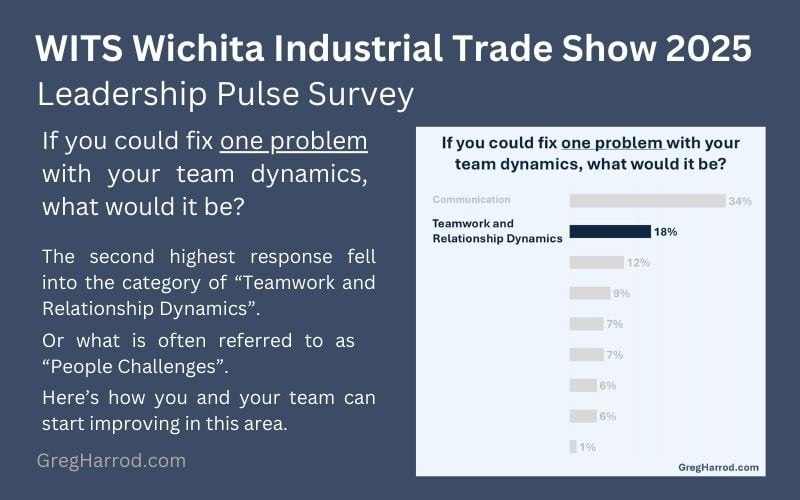
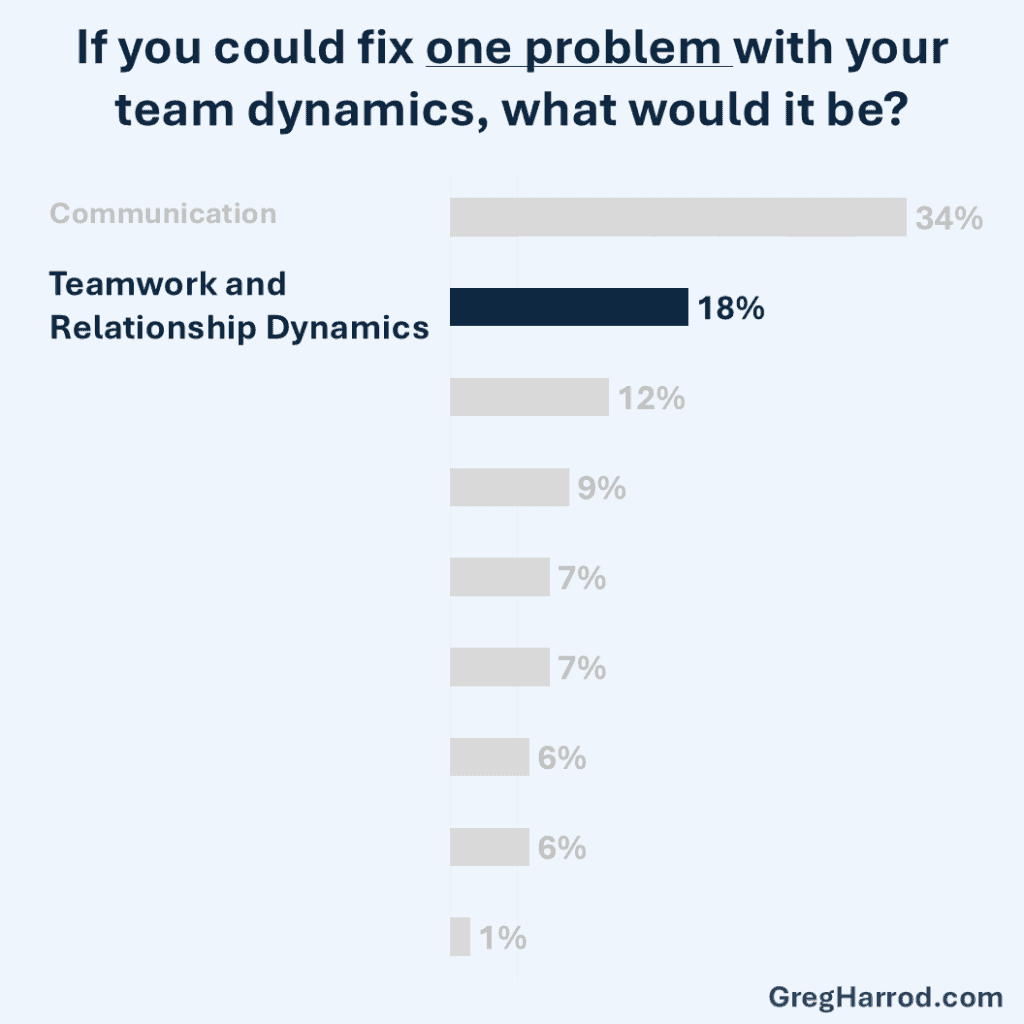
Teamwork and Relationship Dynamics was the second most common reply to this question:
If you could fix one problem with your team dynamics, what would it be?
If you could fix one problem with your team dynamics, what would it be?
Here are some of the exact statements from survey participants:
- “Ego”
- “Trust”
- “Inclusion”
- “Entitlement”
- “Power struggles”
- “Work-life balance”
- “Fostering independence”
- “Less micro-management”
- “Drama between coworkers”
- “Creating a calmness within my team”
- “More teamwork between departments”
- “Concentration on private life instead of work”
- “Vulnerability – We have a lot of ‘Kansas nice’ – very passive aggressive.”
That’s a lot to think about and discuss so let’s dive in!
We’re going to use the Ideation, Activation, Implementation approach based on the Six Types of Working Genius productivity tool and model as we did last time for the topic of Communication.
This will help us identify a solid, intentional action plan you can implement this week if your business has similar challenges with Teamwork and Relationship Dynamics. Or what is often referred to as “people challenges”.
Ideation (Identifying the need for change. Generating ideas and solutions.)
Take a few moments to reflect and think about your team.
If they had taken this survey, would they have made any of these comments? Which ones?
The chances are good they might have because these types of problems are common in teams in all sorts of businesses.
Why?
Because teams are made up of people.
And because we humans are diverse and imperfect, we are continually trying to learn how to better care for each other as we work together in our businesses.
That’s a reality all leaders have to deal with.
And the best leaders are willing to acknowledge and embrace the hard work they have to do to help their teams thrive and flourish as they’re working together.
They ask themselves really hard questions like this one:
“Would my team members be willing to talk to me about concerns like this?”
“People Challenges” are Hard
Talking about team dynamics and “people challenges” is rarely easy or comfortable. But creating an environment where team members can be open enough to have vulnerable conversations with you, their leader, and with each other is critical for leaders and businesses to be successful.
So, I suggest you start with this question to generate some ideas on actions you take this week:
“How might you help your team feel safer and more comfortable talking about these types of concerns?”
3 Ways to Help Your Team Start Talking about Team Dynamics
Here are 3 ideas to get you started:
• Start with humility and vulnerability. You might say something like this during your next staff meeting:
“I’m concerned that I might be too involved in some of your projects and making you feel micro‑managed. Please let me know if you would like me to make some changes in how I’m interacting with you.”
• Read an article or a book (on your own or with your team) that addresses trust.
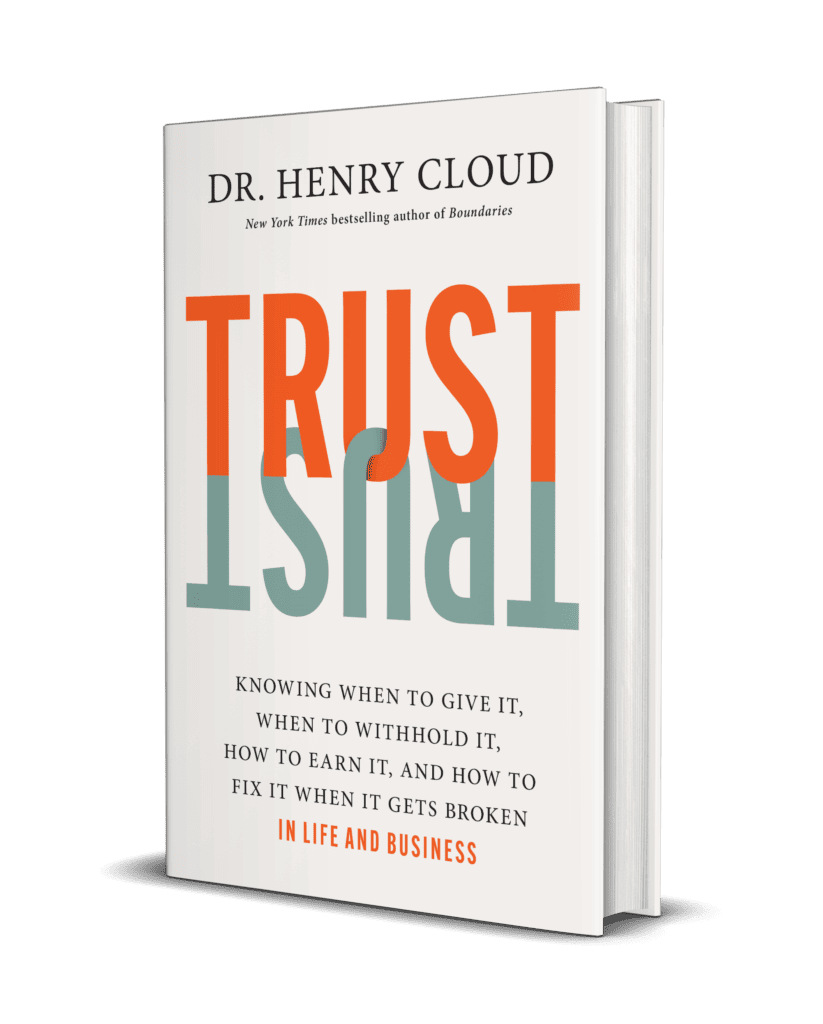
Two of my favorites are The Five Dysfunctions of a Team by Patrick Lencioni and Trust by Dr. Henry Cloud. This 3‑page introduction on Lencioni’s 5 Dysfunctions is an easy place to start. Click here to download a free copy.

• Watch this TED talk “Why good leaders make you feel safe” by Simon Sinek. But don’t just watch it. Think about what actions you can take with your team this week to apply what you learned. Ask for input from your team too to engage them in the process.
That’s the Ideation phase of the work to improve your leadership and your business.
Now it’s time to move through Activation and Implementation.
Activation (Assessing ideas and solutions. Pushing forward with action.)
Pause and think about which ONE idea of all those you came up with is best for your team at this particular point in time.
You probably thought of a lot of things you want to try, but what makes sense to do with the team and the workload you have right now?
You want to start making an impact this week so choose only one action to take.
Pick something that will be meaningful to your team and will show them you are committed to improving the Teamwork and Relationship Dynamics for them.
Implementation (Build momentum with others. Deliver results.)
Great job! You’ve decided on one idea to try. Now create a simple project plan with specific and achievable milestones and get started with your team.
Here’s an example.
A Simple Project Plan to Get Started with Your Team
Today – Send Simon Sinek video to your team and ask them to watch it before your staff meeting.
Staff Meeting – Invest 10 minutes of your meeting agenda to discuss the video. Invite them to be honest about actions they would like you and themselves to take to improve. Commit as a team to take specific actions to achieve the outcomes you want. Set deadlines and assign owners!
Next Staff Meeting – Follow up to confirm the agreed upon actions were taken and review the results. Work together as a team to adjust and adapt as needed.
A Small Beginning is a Good Start
There’s a Bible verse in the book of Zechariah that’s sometimes translated like this,
“Do not despise small beginnings, for the Lord rejoices to see the work begin.”
I hope that’s an encouragement for you like it is for me when I try something new.
Taking only one action this week won’t solve all your Teamwork and Relationship Dynamics problems. In fact, you’ll never be able to “solve” all your people challenges because people are always changing and being influenced by the circumstances of our lives.
But don’t let that discourage you!
As a compassionate leader of people, you can continually make progress to build relationships and trust with your team members by taking actions like the one you’re going to take this week.
One action plan at a time, you’ll build a stronger, more cohesive team and have even more calm confidence as a leader.
I would love to hear what action you decided to take this week to improve the Teamwork and Relationship Dynamics in your business.
Helping you lead with clarity and confidence,
Greg
This article is part of an email series covering the results of the 2025 Wichita Industrial Trade Show (WITS) Leadership Pulse Survey. If you missed any of the emails in the series, you can see them all here. And, if you’re not getting my weekly newsletter and would like to, just enter your info here.

Greg Harrod
Greg Harrod is a Business Coach and Strategic Communications Partner. Follow GregHarrod.com to learn how you can build clear communication, aligned teams, and simple rhythms so your business runs smoothly. Greg will help you learn how to go from daily firefighting to calm, confident leadership by sharing his 30+ years of experience leading teams and businesses.
A quick note about affiliates
Some of the pages on my website contain affiliate links to products, apps, and services. If you click through and purchase, I may receive a commission on the sale and you pay no more. My policy is to only affiliate with products and services that I believe will provide value to you.